Dr Tim Lu is a pioneer in synthetic biology. He and his team are editing immune cells to upgrade the way they detect disease. His method introduces computer logic gate thinking, where cells selectively kill cancer cells and spare the healthy. He tells Mewburn Ellis about his radical new approach.
Forward: features are independent pieces written for Mewburn Ellis discussing and celebrating the best of innovation and exploration from the scientific and entrepreneurial worlds.
Acute Myeloid Leukaemia is an aggressive and hard to treat cancer. Known as AML, it is a blood cancer where the bone marrow makes abnormal myeloid cells, which crowd out healthy blood-forming cells. The disease is forecast to affect 0.5% of men and women in their lifetime.
Recovery rates are low. Current US data shows a five-year survival rate for AML at 32.9% after diagnosis.
There is hope. A radical new therapy developed by Dr Tim Lu and his team is showing extraordinary promise. In December 2025 Lu unveiled clinical data from an ongoing Phase 1 trial in relapsed or previously unresponsive AML patients.
The results are remarkable.
In 18 patients, half showed a significant response, and 39% were in complete remission. Normally patients at this stage in the disease would expect a median survival rate of five months with traditional therapies. Also significant were the minimal side-effects: massively reduced adverse events, with no dose-limiting toxicities.
What is truly arresting is the method used. Lu is a pioneer of synthetic biology. His novel approach is to reprogramme cells to achieve a therapeutic effect.
Lu and his team re-wrote the DNA of immune cells, using logic gate theory used in computers. The cells were configured with OR/NOT logic to determine whether to kill or spare each cell encountered.
“Our approach has a totally different mechanism of action compared to those existing drugs, and could be a powerful new and complementary weapon in the fight against AML,” says Lu. “As an off-the-shelf therapy ready for immediate use, it offers a particularly meaningful advantage for relapsed and refractory AML patients whose disease often progresses too rapidly for patient-specific autologous manufacturing approaches.”
In theory Lu's approach can be translated to other diseases, creating a new field of therapeutics.
There are philosophical implications too. Lu's work is a milestone on the path to the body becoming a programmable entity, with DNA re-written like computer code.
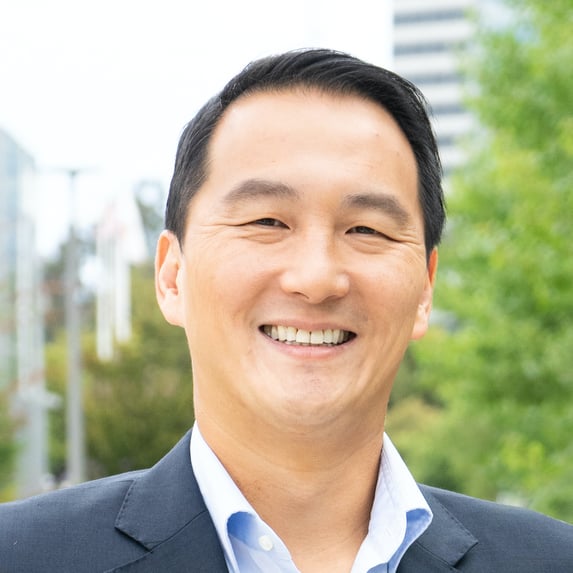
Dr Tim Lu, Co-Founder and CEO at Senti Biosciences
Early work: HiSCRIBE
The idea of programming cells came to Lu early in his academic career. He completed his computer science degree at MIT with a belief that biology could have parallels to the coding world. He believed DNA could be re-written to solve biological challenges.
After a PhD in electrical and biomedical engineering, and an MD in medicine at Harvard, he began to make this dream a reality. He became a tenured professor at MIT and assembled the Lu lab – a cohort of academics who shared his mission of re-configuring genetic code.
“When we first published the concept, a lot of folks said it made sense, but they didn't think it was possible,” recalls Lu. “Frankly, it's not easy to do.”
Lu and his colleagues first generated publicity with a new method for editing bacterial genomes. CRISPR is well known – using a Cas nuclease to cut and rearrange DNA. Lu's method, first called SCRIBE, then given a huge upgrade in 2021 as HiSCRIBE, advances CRISPR. Whilst using a Cas9 targeting module for positioning, the genome is edited by a reverse transcriptase, which copies an RNA template into the bacterial genome. HiSCRIBE is faster and more scalable, and it allows multiple edits to be made outside a lab setting.
The result is a programmable bacterial cell. Lu and his team converted bacteria into what he calls a sort of tape recorder. “A lot of young people don't remember tape recorders!” he admits. “We wanted cells to remember what happened to them. So after an experiment we could collect the cell and read it back, like a tape recorder.” The original SCRIBE recorded the duration and intensity of exposure to a certain molecule. With HiSCRIBE it was possible to add additional events, such as interactions between cells. This opens the door to more advanced events, such as studying how bacteria communicate within a biofilm. The approach can be adapted to encode viruses which cross neural synapses so researchers can track connections across neurons, to illuminate the brain's neural pathways.
The technology is free for other biologists to use. “HiSCRIBE is a powerful tool,” says Dr Lu. “I'm very happy to say that launched a whole subsequent set of papers, not just from my own group, but other groups. People took the concept and improved it and implemented it beyond bacteria and into human cells. There are great efforts in academia to implement this in more complex models, to study things like how the brain encodes memories. Or how does a single cell develop into a complex organ? There have been some really nice papers coming out, building on that concept.”
Senti Bio
Editing bacterial DNA was a major advance, but Lu and his team had a more ambitious project under way. The idea is to recode cells to act like computer logic gates. An immune cell, such as a Natural Killer (NK) cell could be programmed to differentiate between healthy cells and cancerous ones, based on more than one characteristic.
“Chemotherapy is toxic to normal cells,” explains Lu. “Therefore you can't treat patients as aggressively as you would want to, to kill the cancer cells. If we could distinguish cancer from healthy, that is the silver bullet. The simple idea is instead of relying on a single target, we build a therapy which recognises multiple targets. Then we have a cell which can recognise, say, two different cancer targets, and will kill both, but don't affect the healthy cells.”
In 2016 Lu, with colleagues Philip Lee and Jim Collins, founded Senti Bio to research this approach. In 2022, Lu resigned from his professorship at MIT to work full time as CEO.
One of the cancers selected by Senti Bio was AML. The disease is formed of AML blasts and AML leukemic stem cells, which are located alongside haematopoietic stem cells - healthy cells which replenish human blood cells. The goal is to kill the two AML cells, and leave the healthy cells untouched.
The cancerous cells can be identified by the proteins they express on their surface. AML blasts express the CD33 protein on the surface, whilst AML LSCs tend to express FLT3 protein. Healthy cells express both CD33 and FLT3, as well as EMCN protein, not found on the AML cells. NK immune cells struggle with this complex mix, so kill a proportion of healthy cells along with the cancerous ones.
Lu's logic gate thinking led him to redesign the immune cell with a therapy named Senti-202. This gives the immune cell the ability to recognise these signature proteins, and then adapt the response depending on what they detect.
In theory the cells can follow any logic gate patterns: NOT (do not kill if a certain protein is found), OR (kill if one of multiple proteins is found), and AND (only kill if both proteins are simultaneously found).
The cell is able to identify cancer cells via their surface proteins, and kill them. However, if the EMCN protein is also detected, the cell is recognised as healthy, and spared. The parallel with computer logic gates is clear: the cell switches behaviour (kill or spare) depending on multiple inputs.
“The idea of building logic gates is something I was working on while I was still at MIT. It's within Senti where my team and I really built out the core technology and applied it to cancer therapeutics. We are really proud to do that.”
The gene editing is done via DNA synthesis. “The way I think about it is, CRISPR is taking a pre-existing novel and making a change to a single word or letter. Whereas we are trying to insert new text.” There is a variety of ways of achieving this. Lu's team uses a viral vector – a virus delivers the new DNA material into the target cells. The result is a cell with enhanced DNA, allowing the immune cell to run analysis akin to computer logic gates.
The impact
Programming bacterial and mammalian cells is a concept with mouthwatering potential. The AML trial results illustrate the potential. Not only were patients highly responsive to the Senti-202 therapy, the side-effects were notably lower. The traditional cocktail of drugs given to cancer patients tends to produce a long list of side-effects, as healthy cells are damaged along with the cancerous. One survey of AML blood cancer patients found 87 per cent experienced severe short-term effects during chemotherapy, a third with severe long-term effects.
Yet in this case Senti-202 was “well-tolerated, with no Dose-Limiting Toxicities, no SENTI-202-related serious adverse events, or adverse events resulting in discontinuation”.
Dr Nosha Farhadfar, hematologist and adult bone marrow specialist at Methodist Hospital in San Antonio which hosted the research, remarked, “SENTI-202 continues to demonstrate deep, durable responses and a favourable safety profile in patients with relapsed or refractory AML, where standard therapies often offer patients a survival rate of just a few months.”
Lu says, “We have the potential to see a step change in the efficacy of treatment. And I think the reason is we're introducing a completely new functionality that existing drugs don't have. This is the ability to explicitly recognise healthy cells, and don't kill them, is something that no other medicine has right now. It's a completely new functionality in the treatment of AML, and also beyond that.”
The future
The Phase 1 results for AML highlight the power of Lu's approach. The potential for gene editing and logic gates to transform oncology and other fields is only just being understood.
A key part of the equation when developing new therapies will be decoding which genes to edit to achieve a particular goal. This is complex, to put it mildly. Lu is frank about the need for artificial intelligence, machine learning, and the full arsenal of bioinformatics to aid researchers in their work.
“One of the reasons our work is possible is because the data and computational power exists,” he says. “I started my career as a computer science guy at MIT. I was fascinated by programming computers. I just happened to be in Boston when the Human Genome Project was being announced. The idea stuck in my mind that for the first time we could read genetic code. What I hoped would happen is the digitalisation of biology. The problem with biology is that it's designed by evolution or God, depending on your view of the world. We don't understand the wiring diagram.”
So far, biologists have been making piecemeal progress: “For the last 60 years, people have been really good at taking detailed individual vignettes, like a single pathway, and that's been amazing. But to truly understand biology, my belief is you've got to understand the whole wiring diagram. It's very, very challenging as everything is interconnected with each other.”
The full picture is slowly emerging, observes Lu. “We now have all this data about the DNA, the RNA, the proteins, the structures et cetera. The inside of a cell can be analysed using the new computational strategies to try to map out the underlying wiring diagram. This would not be possible without significant advances on the experimental side, coupled with the significant advances on the computational side.”
He says the two approaches to building this full model are either to build a model which “simulates everything along the way”. Or to use machine learning to synthesise all the known data to produce a working model of the cell: “It may not be accurate down to the fine biophysics, but gives you a good understanding of what's going on inside. The interface of these two fields over the past ten years is what has allowed engineering biology to happen.”
It is worth mentioning that Timothy Lu has a brother Jeffrey Lu, who works as an entrepreneur in the biotech space. His company Engine, based in Silicon Valley and Singapore, uses machine learning and genomics to identify interactions between genes, accelerating the identification of drug candidates. Timothy is listed as co-founder, and sits on the board.
“He worked as a consultant for Bain, and then in software,” says Lu of his brother. “He was caught by the same bug as me, which I communicated at the time, that we were on the verge of biology becoming more programmable. His company was built on some of the technology from my lab, and other labs, around using CRISPR to decipher genetic networks underlying disease, including oncology, to uncover targets to go after, perhaps using a combination of therapies to be more effective. They are well on their way to developing some new drug candidates that will hopefully be moved into the clinic.”
Antibodies too
Tim Lu has another entrepreneurial venture on the go, also, a startup called Protuoso Biosciences. “I was just talking about Protuoso to the Mewburn intellectual property counsel about an hour ago!” says Lu. “We are not ready to share in detail what Protuoso is doing.” But he offers a teaser: “Antibodies started off as monoclonal, going after single targets. The most recent evolution of this, which everyone is excited about, is bi-functional, or bi-specific antibodies, that go after two or three targets. The natural thing is to expect more and more complex proteins which go after three, four or five targets at a time, controlling where the proteins go. So only activates at a certain place or time. This is what Protuoso is focussed on.”
Lu admits the idea of re-programming antibody proteins this way will be challenging: “Proteins are super complicated, and the moment you go beyond two functions to three or four or five functions it becomes exponentially more complicated to simulate or experimentally test. So Protuoso is building a platform to build these complex, multifunctional proteins, and then coupling that with a business model that is highly efficient, open to partnering with pharma, so these capabilities can be used broadly. So the innovations are not stuck in Protuoso.”
The expansion of programming antibodies feels like a natural extension of the Lu vision – to programme biological systems to achieve breakthroughs in treatments of diseases. His ultimate goal is even more profound.
“From a philosophical perspective, the really interesting part is can we understand where human thought and memory come from,” he says. “If you boil it down, is it coming from a neuronal circuit and the way it's wired? And if you change the wiring, have you somehow created a new thought. Or does it come down to the molecular level, maybe because two proteins are stuck together? I personally think there is a physical mechanism. We haven't fully understood it. When that is elucidated it opens up a lot of questions about how autonomous is our thinking? What causes us to be who we are? Where does personality come from? How ethical is it to make changes to it?”
For now he's content to focus on the immediate goals – taking Senti's candidate therapies to market, launching Protuoso Biosciences, and progressing his vision of programming human cells. The clinical results for Senti-202 treating AML offer tantalising glimpses of what can be achieved.
“Inventing a new class of medicines and bringing it through clinical trials to approval is a long and difficult journey,” says Lu. “Our entire team, spanning basic research, manufacturing, clinical development, finance, IP, and administration, is motivated by the opportunity to positively impact patient lives and is buoyed by the clinical data. We hope our logic gated therapies become a mainstay in the fight against disease by enabling much more targeted and thus efficacious drugs.”
The publication of the AML Phase 1 trial means his work is now getting the recognition it deserves.
“It's a really exciting time for the field. We are just at the beginning of it,” says Lu. “There is so much more to learn.”
Richard Clegg, Managing Partner and Patent Attorney at Mewburn Ellis comments:
'It’s an absolute privilege for us to work with Tim and his colleagues. I got to know Tim’s brother Jeff a decade ago working on a project that progressed rapidly to pharma partnering and clinical trials and have followed Tim’s incredible work with Senti from that time. We are all inspired by Tim’s ability to mix a holistic view of biological systems with deep insights. His ability to translate that thinking into tractable solutions is deeply impressive. We love being part of the “long and difficult journey” that Tim refers to and are delighted to play our part.'
Written by Charles Orten-Jones.


.png)