Follow-on

Pharma Innovation

(forms and formulations, new medical uses, dosage regimes)

For high-value drugs, innovation does not stop once a lead compound has been developed. The search to maximise both the benefit to patients and the return on investment is ongoing, whether this is the identification of new indications, improving the balance between side effects and efficacy, improving convenience for the end user, or developing efficient and scalable methods of synthesis and production.

We have experience supporting clients with the drafting and prosecution of patents related to follow-on innovation such as novel methods of synthesis, special drug forms such as polymorphs and enantiomers, high purity forms, pharmaceutical formulations, combination therapies, dosage regimes and new medical uses. We have partnered with clients to advise them during their research programmes to capture patentable subject matter before the opportunity to pursue protection is lost.

In the area of new medical uses in particular, we’ve helped shaped the case law of the Boards of Appeal of the European Patent Office to secure recognition of the patentability of therapeutic treatments based on new dosage regimens, new technical effects and new patient subgroups. These influential decisions have helped our clients to protect their investment throughout the drug life cycle.

Follow-on patents, especially those relating to high-value drugs, tend to be heavily opposed. We have significant experience defending such follow-on patents for blockbuster drugs in EPO oppositions, many of which are multi-party oppositions.


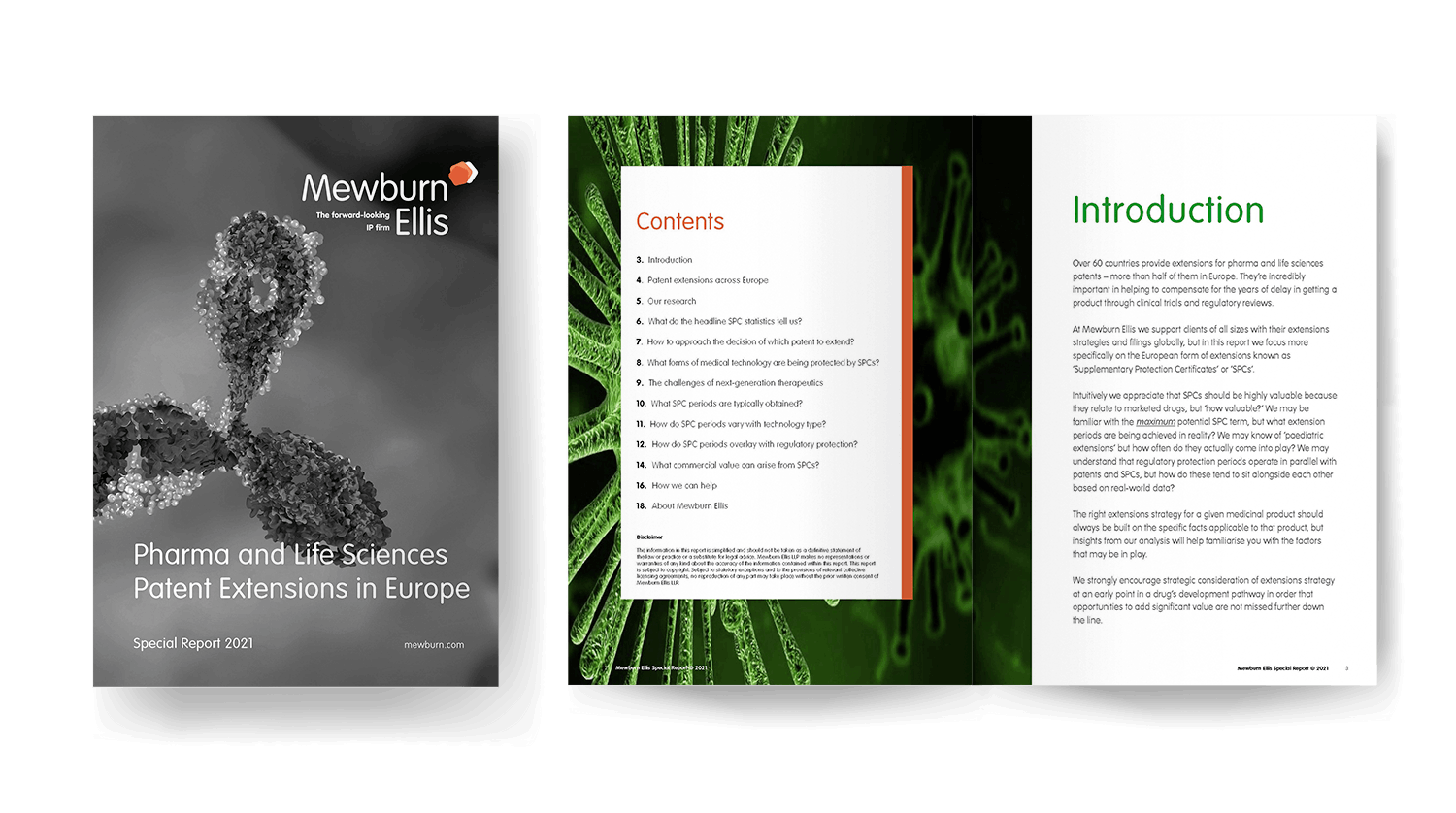
SPC Report Mock-Up v2-compressed

Special Report

Pharma and Life Sciences Patent Extensions in Europe

Having compiled and analysed real-world data, this Special Report sets out to provide valuable insights into the following questions that may face decision-makers handling SPC protection for a new drug:

  1. What do the headline SPC statistics tell us?

  2. How to approach the decision of which patent to extend?

  3. What forms of medical technology are being protected by SPCs?

  4. What SPC periods are typically obtained?

  5. How do SPC periods vary with technology type?

  6. How do SPC periods overlay with regulatory protection?

  7. What commercial value can arise from SPCs?

Read our blogs

Beyond PROTACs and molecular glues: where next for heterobifunctional drug discovery?

Beyond PROTACs and molecular glues: where next for heterobifunctional drug discovery?

by Annabel Cardno

A broader heterobifunctional tool emerges Targeted protein degradation has rapidly progressed from a conceptual curiosity to one of the most closely watched areas in drug discovery. As discussed in ...

General Court confirms Glaxo Inhaler 3D mark is invalid

General Court confirms Glaxo Inhaler 3D mark is invalid

by Rebecca Anderson-Smith

In July 2025, the European Union General Court rejected an appeal against an earlier decision of the Board of Appeal (reported on in our previous article Cipla Europe NV v Glaxo Group Ltd: can a 3D ...

Molecular Glue Degraders (MGDs): what they are, how they work and key IP Issues

Molecular Glue Degraders (MGDs): what they are, how they work and key IP Issues

by Tim Nash

Molecular glue degraders (MGDs) are small molecules that induce or stabilise protein–protein interactions, often by recruiting an E3 ligase to a target protein and triggering its ubiquitination and ...

Orforglipron FDA Approval: Why the First Small-Molecule GLP-1 Pill Matters

Orforglipron FDA Approval: Why the First Small-Molecule GLP-1 Pill Matters

by Andrew Pitts

The GLP-1 landscape changed on 1 April 2026, when the FDA approved Eli Lilly's orforglipron under the brand name Foundayo as the first non-peptide, small-molecule GLP-1 receptor agonist (GLP-1RA) ...

PROTACs reach the market: what the first regulatory approval means for drug discovery and the patent landscape

PROTACs reach the market: what the first regulatory approval means for drug discovery and the patent landscape

by Andrew Pitts

Just as the attention of the pharmaceutical industry appeared to have shifted over the past few years towards biologics with blockbuster potential, a new and exciting therapeutic modality has emerged ...

Most opposed patents of 2025

Most opposed patents of 2025

by Katherine Green

Writing this year’s overview prompted déjà vu and a quick check of 2024’s most opposed patents confirmed that the same innovators feature at the top of the list: patents in the name of Novartis (for ...

ME Forward Masthead White 2