Forward speaks to Mantas Matjusaitis, Plurify co-founder and chief technical officer, tells Mewburn Ellis about the company’s method of sorting stem cells at bioreactor scale.
Forward: features are independent pieces written for Mewburn Ellis discussing and celebrating the best of innovation and exploration from the scientific and entrepreneurial worlds.
Hi Mantas! What was the inspiration for starting your company, Plurify?
We were founded to solve the challenge of cell purification.
The most advanced way to make cell therapies is to differentiate pluripotent, or induced pluripotent, stem cells. These cells can become any cell in the body if you give them specific instructions. But this ability, which is remarkable, can also be a curse, because sometimes you can’t control it. The outcome is that you will have some cells of the right type and some that are not what you wanted.
This can affect the efficacy of the treatment and it can also be dangerous. The worst-case scenario is that some of the pluripotent stem cells remain undifferentiated and cause tumours in patients. Impurities become more of a problem when trying to produce specialised cells at scale, whether that’s neurons for Parkinson’s disease or insulin-secreting cells for diabetes. But, in general, the less unknown things you have in your medicine, the better.
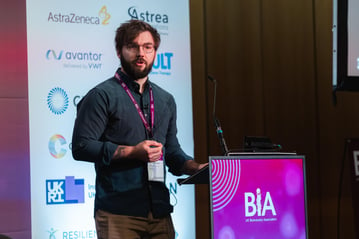
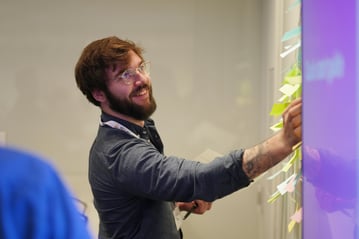
Mantas Matjusaitis, Founder and CTO of Plurify
How are these unwanted cells removed at the moment?
Current sorting methods have limitations and aren’t always suitable for use at scale. Take fluorescence-activated cell sorting (FACS), for example. This uses a laser stream to sort desired from undesired cells based on their surface markers, but often the surface markers aren’t sufficiently different to allow accurate sorting.
You also need to get all of your cells through a few tiny nozzles so that the laser can shine on them and tell the difference between them. If you have a 500-litre bioreactor, that means billions of cells need to go through it, which takes time. You also need to take the cells out of the bioreactor, so there’s a chance of contamination. But, more importantly, cells can change or die during sorting, which affects your product quality.
Lastly, some cells don’t like being squeezed through the nozzle due to their complex structure. Neurons, with their axons, or muscle cells with their large cell bodies, will lose integrity, making the output useless.
Another approach uses magnets rather than lasers. Magnetic-activated cell sorting (MACS) attaches tiny magnetic beads to target cells and pulls them out using a magnetic field. This makes it gentler on fragile cells and easier to handle larger volumes. However, it still relies on surface markers, so the fundamental blind spot remains. It’s also a blunter instrument: where laser sorting can juggle multiple characteristics to make a fine-grained decision, MACS gives each cell a simple yes or no, which makes it harder to separate populations that look similar. And it’s still necessary to remove cells from the bioreactor, bringing the same contamination and stress risks.
So, what is Plurify’s solution?
Our process, which we call plurification, can take place inside the bioreactor and uses multiple intracellular biomarkers to distinguish between cell types. This will enable us to remove more unwanted cells, including some of the progenitor cells that can cause growths in patients, so will improve safety. We hope that the efficacy will increase, although that’s still to be tested. There’s also an argument to be made that it will reduce cost.
We introduce our RNA (we call it PluRNA) to all pluripotent cells at an early stage of the process – before you have billions of cells. This enables us to keep the costs really low and ensure that every single pluripotent cell has our PluRNA.
That PluRNA sits in the cells and, as they grow in number, our PluRNA replicates and is inherited by every new cell. You end up with billions of pluripotent cells – and PluRNA being present in every one of them. To make those pluripotent cells into a cell therapy product, you then differentiate them. Some of those cells will become your desired cell (e.g. an insulin-secreting beta cell), while other cells will not. But all of those cells still have our PluRNA.
Our PluRNA then kicks into action with the help of some small molecules. It can detect specific biomarkers inside the cell and ‘understand’ what kind of cell it is. If it’s a desired cell, nothing will happen and the cell remains in the bioreactor. If it’s not desired cell, the cell will self-destruct, owing to the presence of suicide genes in PluRNA. You end up with a bioreactor full of desired cells only.
We hope this technology will empower and enable cell therapies, allowing patients to benefit from treatments that are currently struggling to get into clinical trials because of impurity and efficacy issues.
How was this idea turned into a company?
Plurify is relatively young, at just over two years old, and our origins are quite different from what you generally hear. Companies typically start out with the technology to solve a problem. Plurify began with a problem in need of a solution.
Deep Science Ventures, a venture-building organisation, and Cell and Gene Therapy Catapult, which was established by Innovate UK to advance the growth of the UK cell and gene therapy industry, came together to look at the bottlenecks in the production of cell therapies.
They identified cell purification as a key problem and then worked backwards. They looked at which technologies could help address the problem and then searched for founders who could deliver on the idea. We spun out a few months after all three founders were in place.
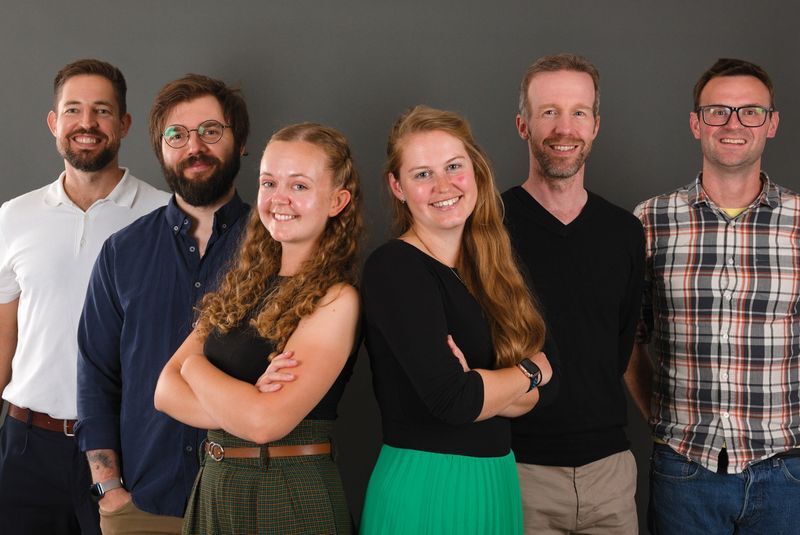
The Plurify team
What stage are you at?
We’ve proved the concept on a small scale, in multiple differentiations and other culture conditions. We’re looking for, and working with, a number of partners to start testing this in their manufacturing systems. So, we’re moving from proof of concept to industrial validation, although it’s still early days.
And what’s PluRNA? What makes it special?
Normal RNA lasts for days and gets diluted by every cell division. Some enhanced versions of RNA can last for a couple of weeks, even a month, but levels drop over time. PluRNA can last as long as we need it to and cells pass it on to their progeny without it being diluted.
Plurify is also trying to improve the production of adeno-associated virus (AAV) vectors for gene therapies. Can you briefly describe the current production process and why it needs to improve?
Currently, these vectors are produced by expanding wild-type HEK cells to hundreds of litres and transfecting them with three plasmids, which are DNA structures. This transfection is very inefficient. Many cells don’t receive all three plasmids and some don’t get any at all. The result is that only a small proportion of cells in the bioreactor contain everything they need to produce the vector.
We’re building a system that replaces two of the three plasmids with PluRNA and will make sure that every single cell has everything it needs from the get-go. So, in theory, our process will reduce waste and increase productivity. There should be less variability between batches and, because we’d use fewer raw materials, costs should be lower.
It sounds as if this work on an AAV producer cell line is at an earlier stage?
Yes, this project started late Q2 last year and it’s definitely much more challenging than some of the other things we’ve done. It’s out there regarding difficulty.
Does that make it more interesting – and more fulfilling when you get there?
In a way it does but, as a small company with limited resources we can’t risk being consumed by curiosity.
And what about the advantages to patients?
At the moment, most gene therapies are dealing with rare diseases. If you have only 1,000 patients in the world with a specific disease, a cost of a couple of million for a gene therapy is maybe justifiable or at least manageable for insurers and governments.
But if we start treating diabetes with gene therapy or Alzheimer’s, we’ll need much, much more product and the cost would not be sustainable.
If the cost drops and productivity increases, we open up gene therapy to a much broader spectrum of diseases and so to many more patients. There will still be bottlenecks, but at least manufacturing will no longer be one of them.
Thank you for these insights into your team’s remarkable work, Mantas!
It’s been a pleasure.
Anja Koller, Senior Associate and Patent Attorney, at Mewburn Ellis comments:
“Manufacturing constraints remain a key challenge for many cell and gene therapy developers. This interview with Plurify highlights how important manufacturing considerations are in laying the foundation for cell therapies to become available to patients and for their successful development, scale‑up and commercialisation.”
Written by Fiona MacRae.

.png)