This week, Anthropic announced that mathematician Levent Alpöge had used an internal version of its AI model Claude to tackle the Riemann hypothesis, one of the most celebrated unsolved problems in maths. Terence Tao describes the result as an “enormous” Lean-only proof of the Generalised Riemann Hypothesis, with mathematicians now working to verify it and extract its underlying mathematical strategy1.
First proposed in 1859, the Riemann hypothesis has resisted generations of mathematicians. Yet the way it appears to have been solved raises a question that reaches beyond maths: what happens when machines produce new knowledge faster than humans can make sense of it?
First, a brief explanation of the problem.
Briefly, the Riemann hypothesis states that every non-trivial zero of the Riemann zeta function has real part ½:
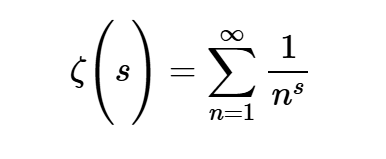
In plainer terms: there are various values of s for which the value of ζ(s) is zero. Many of those values are complex numbers, having both a “real” part and an “imaginary” part. Riemann hypothesized that, for every non-trivial solution, the real part is exactly ½, irrespective of the imaginary part. While this may appear an obscure result in pure maths, its consequences are profound because of the close relationship between the Riemann zeta function and the distribution of prime numbers.
But for those interested in AI, how the proof was produced may be considerably more interesting than the theorem itself.
AI that can check its homework
As my colleague Amelia Sloan explained in her earlier article on AI and formal maths, the key is Lean, a formal proof system.
Ordinarily, asking an LLM to prove a mathematical theorem encounters a familiar problem. LLMs are extremely good at producing things which just look correct. An alleged proof can sound convincing while containing a subtle error which carries forward and invalidates the entire argument. Checking the answer may then require an expert to spend longer examining it than they would have spent solving the problem themselves.
Lean expresses mathematical propositions and proofs in a formal language that a computer can check. Pair it with a generative model and the model has a way to test its work. It can try different approaches and use Lean’s feedback to find out whether each formal argument holds up.
This approach is already reaching beyond individual mathematical demonstrations. Work on formal mathematical reasoning has specifically identified the “verifiable generation of code and hardware designs” as a potential application, while AI-driven formal proof search is now being applied to open research problems2,3.
The Riemann result shows what happens when that loop works at scale: producing and checking a proof can be easier than understanding it.
We have the answer. Now we need to understand it.
The formal proof produced by Alpöge and Claude is vast. An early informal manuscript reportedly ran to more than 250,000 pages, though that is not an indicative measure of how long a readable account will need to be4.
Fortunately, nobody needs to read all 250,000 pages.
The task now is to extract from that gargantuan formal object a much smaller collection of mathematical ideas which humans can understand and use. There is good reason to think that will happen. Tao describes the current process as one of verifying the proof and “extract[ing] the strategy of proof”, and says the initial picture appears to involve “the full power of modern developments on the Langlands program and arithmetic geometry”1.
Tao’s description suggests that the problem is not necessarily beyond human understanding. AI may simply be bringing ideas from different areas of maths together faster than mathematicians can work through the result.
This distinction matters because mathematicians traditionally want something more from a proof than the mere fact that something is true. They also want to know why it is true.
The route to a result can be, and often is, more useful than the result itself. A proof may connect areas of maths that seemed unrelated, or yield a technique that solves other problems. Finding the ideas inside a huge formal argument is not just a matter of making it readable: it allows mathematicians to understand at a more fundamental level how one discovery leads to the next.
Terence Tao has put the point neatly when discussing AI-generated maths: “It is not enough to generate and verify the proofs. The proofs need to be explained well enough that they can be communicated and understood by the community.”5
The traditional order of mathematical research has been something like:
human insight → proof → verification
We may increasingly see:
AI discovery → machine verification → human understanding
Human understanding still has to follow. It may now be the slowest step.
What happens when this process leaves maths?
This way of working need not stop at maths, maths lends itself to this approach because there are precise rules for checking an argument. Formal methods can also verify particular properties of software and hardware. Researchers in AI and formal reasoning are already exploring how to generate code and hardware designs that can be checked in this way2.
Imagine an AI model designing part of a processor. Its design is faster or more efficient than anything its human engineers have produced. Formal verification establishes that the resulting circuit behaves according to specification.
Extensive physical testing confirms the performance improvement.
An engineer need not be able to explain every design decision to establish that the processor works.
The same could apply to security-critical software. An AI model could write the code, while formal tools check that it satisfies a defined set of security properties. Engineers might spend less time reviewing each line and more time specifying what the program must do and checking that it meets those requirements.
Seen that way, the Lean proof points to a possible engineering workflow:
AI generates → machine verifies → humans supervise and understand.
But formal verification only checks that a system meets its specification. It cannot tell us whether we wrote the right specification.
If AI generates a processor and we mathematically prove that it behaves according to specification, we can have a great deal of confidence in that proposition. But if the specification omitted an important security property, even an immaculate proof provides no protection against the thing we forgot to ask about.
The same problem arises in AI-generated maths. Lean can check a formal statement, but humans still need to establish that the statement captures the problem they meant to solve. Amelia has discussed this distinction in her article on AI-assisted formalisation.
That would change where human expertise is needed. If machines can find and verify solutions, we may spend less time working through each step ourselves. More of our work may lie in choosing the questions, deciding which properties matter, checking that the specification says what we mean, and making sense of the answer.
There is another bottleneck: access
Alpöge did not use the publicly available version of Claude. Tao describes the system as an “internal AI model”1.
If these internal models can produce important new maths, who gets to use them may help determine who can do research at the frontier.
This is already visible in the way frontier models are being made available to researchers. Anthropic's Guest Investigators programme, for example, has offered selected outside researchers access to unreleased models and specialised research harnesses which are not available through its commercial products.
This raises questions about reproducibility, competition and credit. In principle, a mathematician has needed little more than pencil and paper to work at the frontier, but this may be changing. If research comes to depend on proprietary models, large amounts of compute and specialised infrastructure, a few private companies could control some of the most powerful tools in maths.
The divide would then be not just between humans and machines, but between researchers with access to those machines and researchers without it.
The new bottleneck
Maths offers a clear view of what this shift might mean. Alpöge and Claude appear to have answered a question which has resisted mathematicians for 167 years. Lean provides machinery capable of checking the resulting formal argument. Mathematicians must now turn that enormous formal object into ideas which people can understand, communicate and use6.
Human understanding is not obsolete. We still need it to make use of what machines produce.
We are used to asking computers to solve problems we understand. Generative AI may let us produce proofs, software and designs before we fully understand how they work. The next constraint on AI’s usefulness may not be its ability to find an answer. It may be our ability to understand the answer well enough to use it.
References
-
Tao, T. (2026). “Unforced Euler singularity, unforced Navier-Stokes singularity, and the Generalized Riemann Hypothesis”. What’s new, 20 November.
-
Yang, K., Poesia, G., He, J., Li, W., Lauter, K., Chaudhuri, S. and Song, D. (2024). “Formal Mathematical Reasoning: A New Frontier in AI”. arXiv:2412.16075v1, 20 December.
-
Tsoukalas, G. et al. (2026). “Advancing maths research with AI-driven formal proof search”. Science, 394(6820), pp. 234–239, 8 October. DOI: 10.1126/science.aej2213.
-
Harrison Dupré, M. (2026). “Anthropic Mathematician Claims He’s Solved the Riemann Hypothesis Using Claude”. Futurism, 20 November.
-
Beaufore, J. (2026). “Watch: Fields Medalist Terence Tao on Artificial Intelligence and Why We Do Math”. Simons Foundation, 13 August.
-
Rubinstein, M. (n.d.). “Alpöge/Claude proof of the Generalized Riemann Hypothesis”. University of Waterloo. Verification results dated 21 November 2026.