UPC Weekly brings you timely, thoughtful and joined-up insight into the evolving landscape of patent litigation at the Unified Patent Court.
2026 Week 46
Scientific understanding does not stand still. But what happens if the understanding of bacterial species changes after the patent was filed so that an exemplified microorganism no longer belongs to the species recited in the claim?
That was one of the more newsworthy questions considered by the Hague LD in Caelus Lifesciences v. Pendulum Therapeutics (UPC-CFI-0001615/2026, 28 October 2026) concerning a PI application granted against Pendulum’s “Metabolic Daily” and “Glucose Control” products.
EP 2753187 B2
Caelus Lifesciences IP B.V. applied to the court for preliminary measures to stop Pendulum and another company (iHerb) from selling “Metabolic Daily” and “Glucose Control” in the UPC territory and Switzerland, alleging that they infringe their European patent EP 2753187 B2 for preventing and/or treating insulin resistance.
The court broke down claim 1 into the following features:
1.1 Eubacterium hallii and/or Alcaligenes faecalis
1.2 for use in preventing and/or treating
1.2.a insulin resistance
1.2.b and/or insulin resistance-related complications selected from metabolic syndrome, dyslipidemia, type 2 diabetes mellitus, and insulin resistance in endocrine diseases such as in obese subjects with type 1 diabetes mellitus, Cushing's disease and lipodystrophy syndromes.
The patent described the bacteria Eubacterium hallii (E. hallii) as a butyrate-producing species of the genus Eubacterium. (Butyrate is a short-chain fatty acid which can influence insulin sensitivity and stimulate intestinal production of GLP-1, a hormone involved in regulating insulin secretion and blood glucose.)
Example 1 of the patent showed a positive correlation between E. hallii and the corrective effects of fecal matter transplantation. Example 3 presents mouse experiments where oral administration of the bacteria known as “L2-7”, characterised in the patent as being a strain of E. hallii, improved insulin resistance and fasting lipid profiles.
Changing Taxonomy
Several years after the patent’s 2011 priority date, a scientific publication by Shelly et al. proposed to reclassify E. hallii as the species Anaerobutyricum hallii, a member of a newly identified genus Anaerobutyricum (which is not in the same family as Eubacterium). Shelly et al. 2018 also characterised “L2-7” not as a strain of the newly identified A. hallii species, but rather as another species of the same genus; Anaerobutyricum soehngenii. The field has followed these reclassifications.
That left the LD with an intriguing question of claim construction. What does a claim referring to “E. hallii” mean?
Taxonomy then or taxonomy now
The court construed the claim from the perspective of the skilled person at the priority date.
Pendulum and iHerb argued that claim 1 should be limited to “L2-7”, later named A. soehngenii, which had been used to demonstrate the therapeutic effects in the mouse experiments. The court disagreed, noting that as a “general rule, examples are not limiting and the claims recite E. hallii, without limitation.” The court also accepted Caelus’ assertion that Example 1 identified E. hallii (as the species) as being advantageous, thereby providing broader support.
At paragraph 5.4.6, the court held:
“Caelus also made sufficiently clear that E. hallii should therefore be interpreted as A. hallii in modern terminology, while the claim further encompasses strain L2-7, at the priority date assumed to belong to E. hallii (but later reclassified as not a strain but a species called A. soehngenii).”
Likely infringement and likely validity
Being proceedings for preliminary measures, not full merits proceedings, the LD Hague only assessed infringement and validity on a summary basis (which at the UPC is still fairly detailed). The court analysed, and dismissed, Pendulum and iHerb’s arguments of added matter, insufficient disclosure and obviousness. Of particular interest was that the patent benefits from a strong presumption of validity, having survived opposition and appeal proceedings at the EPO (being maintained in amended form).
Having found that the claims are not limited to “L2-7” (A. soehngenii), the court also dismissed Pendulum and iHerb’s arguments of non-infringement. It was not disputed that “Metabolic Daily” and “Glucose Control” both contain A. hallii, and the webpages selling these products show the following mechanistic diagram:
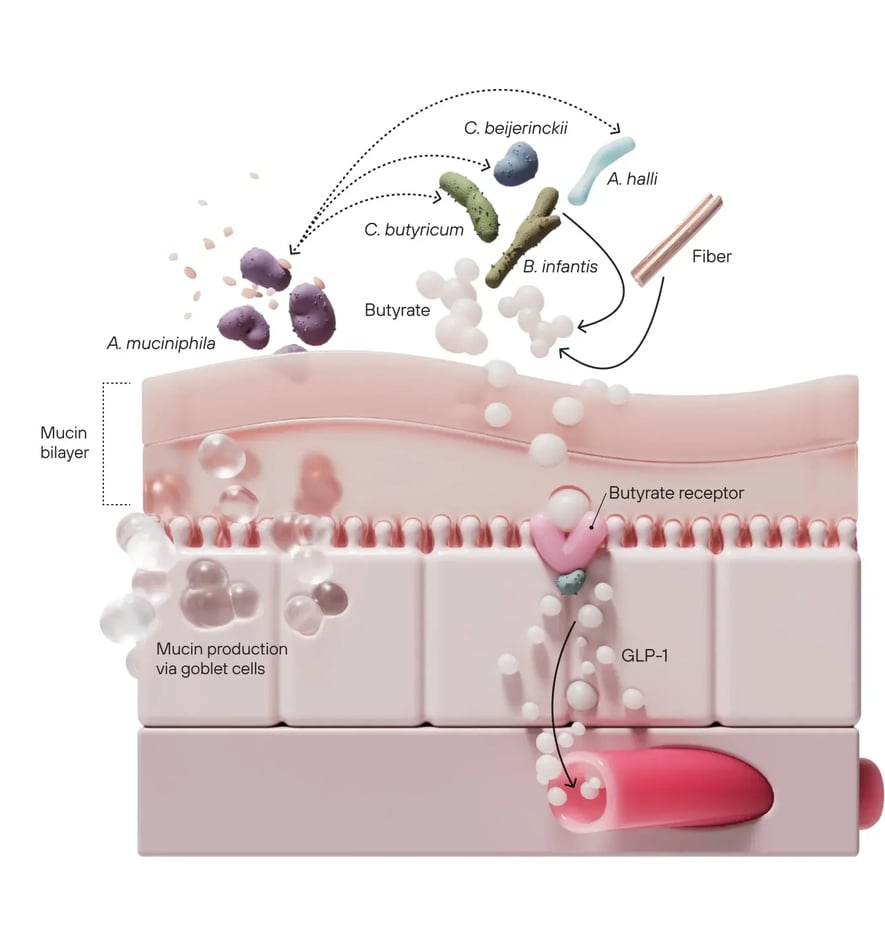
Among their non-infringement arguments was the assertion that claim 1 required the recited hallii bacteria, on its own, to produce the claimed therapeutic effect, and that “Metabolic Daily” and “Glucose Control”, in contrast, contained other components that contribute to their beneficial effects. Again, the court did not agree with the defendants, finding it “sufficiently plausible that hallii has a meaningful contribution to the effect” as emphasised by their marketing materials. This supported the court’s decision to award the preliminary injunction, alongside the findings that the patentee acted without undue delay in the circumstances.