Much of the discussion around the gut microbiome focuses on digestion, inflammation or related areas such as metabolic health. However, the relationship between the gut microbiome and hormones is not a new idea. In 2011, Plottel and Blaser coined the term estrobolome to describe the collection of microbial genes involved in oestrogen metabolism1. Since then, a growing body of research has suggested that this microbial network may play an important role in regulating oestrogen levels within the body.
Oestrogen plays an important role in many aspects of human health, influencing not only the reproductive system, but also others such as the cardiovascular and immune systems2. As a result, disruptions in oestrogen levels in the body can lead to the development of oestrogen-related diseases, and abnormal oestrogen metabolism can contribute to these disruptions3.
Oestrogen is produced primarily by the ovaries. However, the amount circulating in the body is also influenced by metabolism in the liver, where oestrogen undergoes conjugation (primarily through sulfation and glucuronidation), generating forms that are less biologically active and more readily excreted via the intestines4.
This process might appear to represent the end of oestrogen’s lifecycle. In reality, the gut microbiome can influence whether these compounds are eliminated or returned to circulation.
Central to this process are microbial enzymes known as β-glucuronidases. These enzymes are produced by some gut microbes and remove glucuronide groups from conjugated oestrogens. The result is regeneration of biologically active forms that can be reabsorbed from the intestine and returned to the bloodstream in the process known as “enterohepatic recycling”, which is illustrated in Figure 1.
As a result, the activity of the gut microbiome can influence the balance between oestrogen excretion and recirculation.
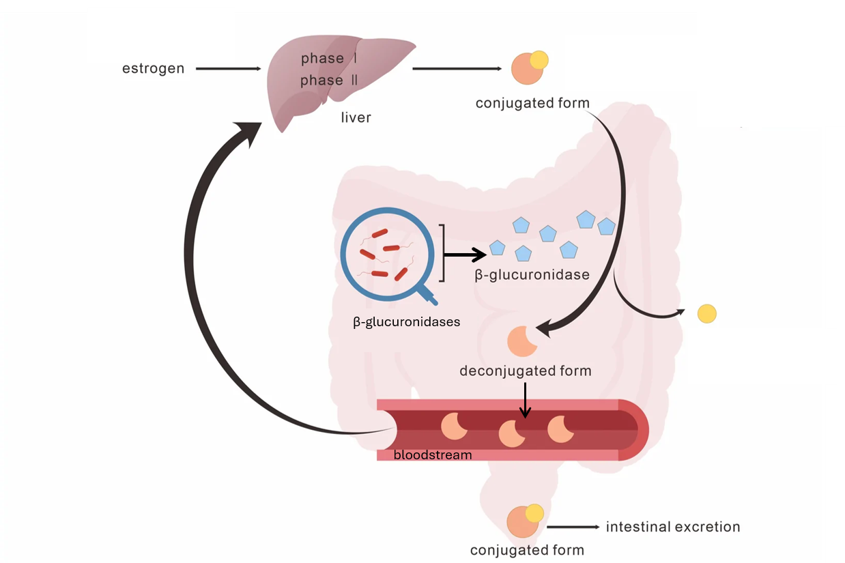
Figure 1. Schematic representation of enterohepatic recycling of oestrogen (adapted from reference 3).
β-glucuronidase activity has been identified across a range of gut bacteria, including members of the genera Bacteroides, Bifidobacterium, Escherichia, Lactobacillus, Clostridium and Collinsella. Importantly, the capacity to metabolise oestrogens is not restricted to a single species and can vary significantly between strains. The estrobolome is therefore less about which microbes are present and more about their functional characteristics.
One aspect that makes the estrobolome particularly interesting is that the relationship between oestrogen and the gut microbiome appears to operate as a biological feedback loop. The gut microbiome influences circulating oestrogen levels through enzymatic metabolism, while oestrogen appears to shape the composition and diversity of the gut microbiome3. This interplay can be seen throughout life, with hormonal transitions such as puberty and menopause associated with shifts in gut microbial populations5.
Why does this matter? Researchers are increasingly investigating how interactions between the gut microbiome, hormone regulation and inflammation may influence reproductive health and disease. Emerging evidence has linked the estrobolome to numerous conditions including endometriosis, infertility and hormone-responsive cancers, although many of the underlying mechanisms remain to be fully understood5,6.
Increasing interest in the estrobolome reflects a wider change in how we think about the gut microbiome. Once considered mainly in the context of digestion, it is now understood as a metabolically active system with potential effects on inflammation, immune function and hormone metabolism. As discussed previously in our article on the link between the microbiome and chronic liver disorders, the influence of the gut microbiome may extend far beyond the gastrointestinal tract. Researchers are uncovering links between microbial activity and indications such as liver disease and mental health that were once considered largely unrelated to the microbiome.
This shift in thinking extends beyond the gut. As explored in our articles on the vaginal microbiome and IVF success and the potential of the female microbiome, researchers are increasingly understanding the importance of other microbial communities for reproductive health. The estrobolome adds another layer to this story, suggesting that microbial activity may influence hormone biology in ways we are only beginning to appreciate.
How the research in this area could be translated into new diagnostic or therapeutic approaches remains to be seen. We will be following developments in this area with interest.
If you would like to learn more about how our team can help protect your women’s health innovation, please reach out to a member of our Women’s Health team.
References
-
Plottel CS, Blaser MJ. Microbiome and Malignancy. Cell Host Microbe. 2011;10(4):324-335. doi:10.1016/j.chom.2011.10.003.
-
Hamilton KJ, Hewitt SC, Arao Y, Korach KS. Estrogen Hormone Biology. Curr Top Dev Biol. 2017;125:109-146. doi: 10.1016/bs.ctdb.2016.12.005. Epub 2017 Feb 3. PMID: 28527569; PMCID: PMC6206851.
-
Hu S, Ding Q, Zhang W, Kang M, Ma J, Zhao L. Gut microbial beta-glucuronidase: a vital regulator in female estrogen metabolism. Gut Microbes. 2023 Jan-Dec;15(1):2236749. doi: 10.1080/19490976.2023.2236749. PMID: 37559394; PMCID: PMC10416750.
-
Raftogianis R, Creveling C, Weinshilboum R, Weisz J. Estrogen metabolism by conjugation. J Natl Cancer Inst Monogr. 2000;(27):113-24. doi: 10.1093/oxfordjournals.jncimonographs.a024234. PMID: 10963623.
-
Salliss ME, Farland LV, Mahnert ND, Herbst-Kralovetz MM. The role of gut and genital microbiota and the estrobolome in endometriosis, infertility and chronic pelvic pain. Hum Reprod Update. 2021 Dec 21;28(1):92-131. doi: 10.1093/humupd/dmab035. PMID: 34718567.
-
Mou, E., Guo, R., Yi, Y. et al. Beyond estrobolome 1.0: unraveling endocrine-microbiome axis as a driver and therapeutic target in hormone-driven cancers. npj Biofilms Microbiomes (2026). doi: 10.1038/s41522-026-01074-9.




.png)