Protein

Therapeutics

We have extensive experience drafting and prosecuting patent applications in the field of engineered peptide therapeutics, gaining insight into the different challenges that working in this area raises as compared to patenting antibody or polypeptide therapeutics. Our experience includes work on portfolios covering approved and candidate peptide therapeutics, such as Lixisenatide, Danegaptide, Glepaglutide and Dasiglucagon.

Many of these challenges revolve around the evolution of an initial wild-type peptide to become a candidate peptide therapeutic, modifying or truncating the wild-type peptide and often incorporating other types of derivatisation and cyclisation to optimise the properties of the therapeutic molecule. This work requires an understanding of underlying biochemistry and chemistry of the molecules.

In addition, the team at Mewburn Ellis working in this area have extensive experience of freedom-to-operate analysis, EPO opposition and appeals and other strategies to manage the competitive landscape, while maximising the protection of the products of the applicants we represent.


opps-report-1-1-1-1

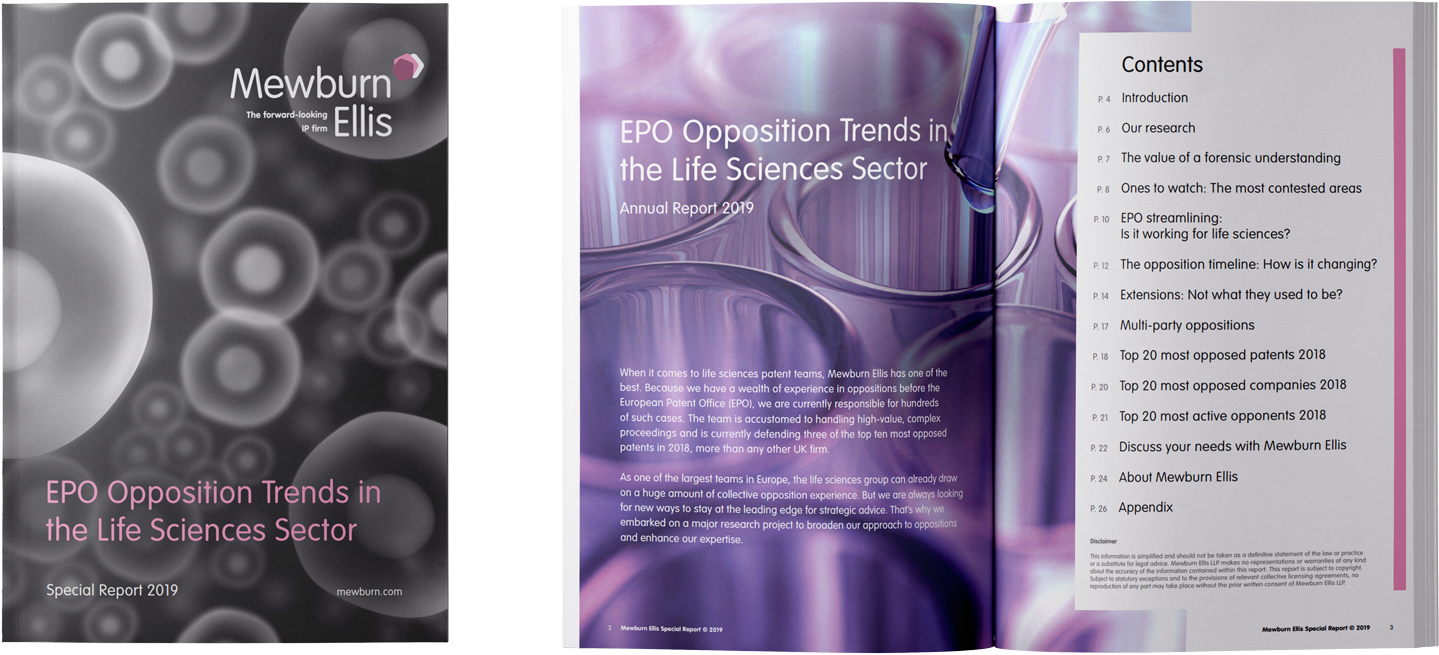
Opposition Trends in the Life Sciences Sector

Special Report

In spring 2019, Mewburn Ellis undertook 350 hours of research, analysing more than 5,000 opposition cases filed at the European Patent Office over the last ten years, studying the timelines for hundreds of life sciences oppositions both before and after the EPO’s opposition streamlining initiative.

View the 2020 addendum for this report, based on information as it appeared on the EPO Register on 10 January 2021 and from bulk data sets extracted on this date.

Download the Report

Read our Blogs

Global considerations for innovators in microbial biostimulants and biocontrol agents

Global considerations for innovators in microbial biostimulants and biocontrol agents

by Ben Tolley

Our recent analysis found that global patent activity in microbial biostimulants and biocontrol agents is surging, with strong growth in both patent applications and granted patents. For a detailed ...

EPO decision T 0655/24: inventive step and the unpredictability of antibody mutations

EPO decision T 0655/24: inventive step and the unpredictability of antibody mutations

by Chris Denison

This is the final post in a series on decision T 0655/24 and its implications for antibody practice at the EPO. In the first post, Chris discussed the Board’s strict approach to post-filing evidence ...

EU NGT Regulation Approved: A Step Towards Innovation

EU NGT Regulation Approved: A Step Towards Innovation

by Louise Atkins

The EU’s long‑awaited regulation on New Genomic Techniques (NGTs) has now cleared its final legislative hurdle, with the European Parliament voting to approve the agreed framework, rejecting ...

Molecular Glue Degraders (MGDs): what they are, how they work and key IP Issues

Molecular Glue Degraders (MGDs): what they are, how they work and key IP Issues

by Tim Nash

Molecular glue degraders (MGDs) are small molecules that induce or stabilise protein–protein interactions, often by recruiting an E3 ligase to a target protein and triggering its ubiquitination and ...

Ageing as a disease: Groundbreaking or Ground-Shaking?

Ageing as a disease: Groundbreaking or Ground-Shaking?

by Emily Garnett

As a species, humans have long been preoccupied with living longer and healthier lives. However, prior to the advent of modern medicine, any real prospect of fulfilling these ambitions existed more ...

EPO decision T 0655/24: Striking the Right Balance in Antibody Claim Drafting

EPO decision T 0655/24: Striking the Right Balance in Antibody Claim Drafting

by Chris Denison

This is the second in a series of three posts on recent decision T 0655/24 and its implications for antibody practice at the EPO.

Learn More
ME Forward Masthead White 2